
How It Works
Multimodal & Intermodal Transport Explained
4 min read
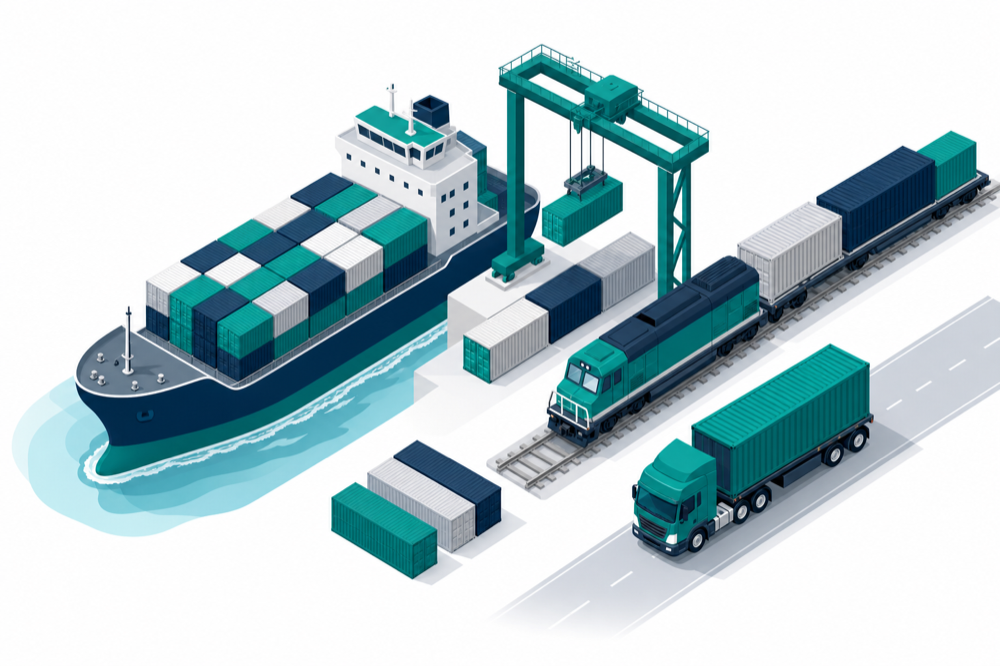
Most international shipments use more than one mode of transport. Multimodal and intermodal transport combine sea, rail, road and air to move cargo efficiently from door to door.
Multimodal vs intermodal
Intermodal transport uses multiple modes with the cargo staying in the same container, often under separate contracts for each leg. Multimodal transport also uses multiple modes but under a single contract with one operator responsible for the whole journey.
Why it matters
- Containers transfer between ship, rail and truck without unpacking the cargo.
- Rail legs (for example to and from an ICD) cut road haulage and cost.
- A single multimodal contract simplifies responsibility and claims.