
Rail Freight
How Rail Freight Works: A Practical Guide
5 min read
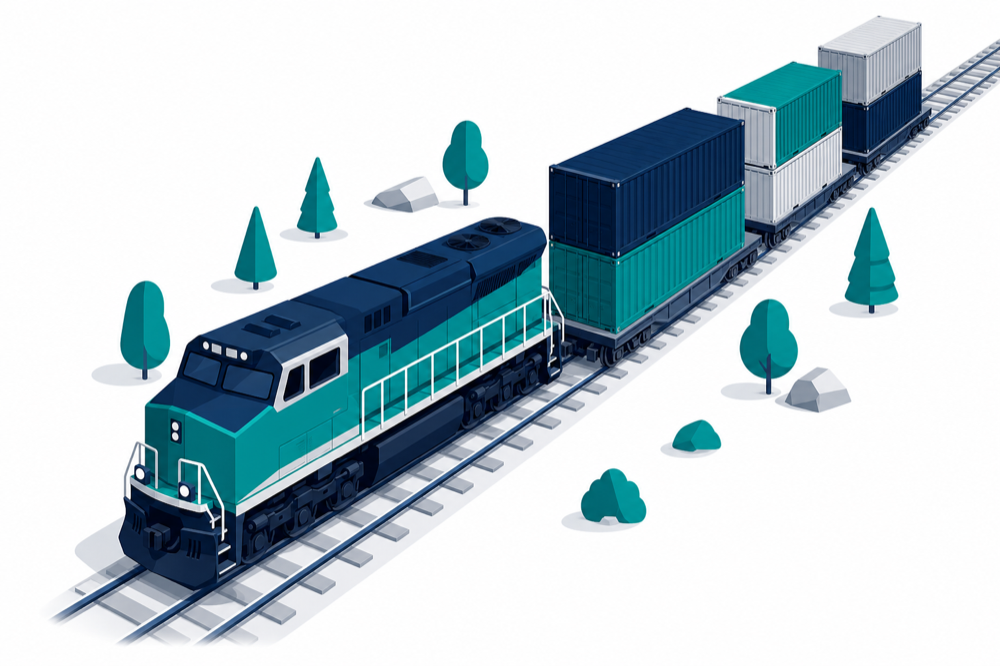
Rail freight moves large volumes of cargo over long distances at lower cost and lower emissions than road. It is a backbone mode for containers and bulk commodities, usually paired with trucking at each end.
Container and bulk trains
Container trains carry stacked shipping containers on flat wagons between ports and inland terminals. Bulk trains carry commodities such as coal, cement, food grains, ores and fertiliser in dedicated wagons. Both move in long rakes that replace dozens of trucks.
Terminals and ICDs
Cargo is loaded and unloaded at rail terminals and Inland Container Depots (ICDs). An ICD lets importers and exporters clear customs inland while containers move by rail to and from the gateway port, reducing road haulage.
When rail beats road
- Long distances where rail cost per tonne-km is lower.
- Large, steady volumes that fill a train rake.
- Routes with good rail and ICD connectivity at both ends.